


Most internal documentation is organized by team. Each team owns the docs for its own service, which makes sense for ownership.
It breaks down the moment someone has to ship something. To deploy a new service, an engineer has to call the auth service, get a token, call the payments service, handle the webhook, and wire it into the deployment pipeline.
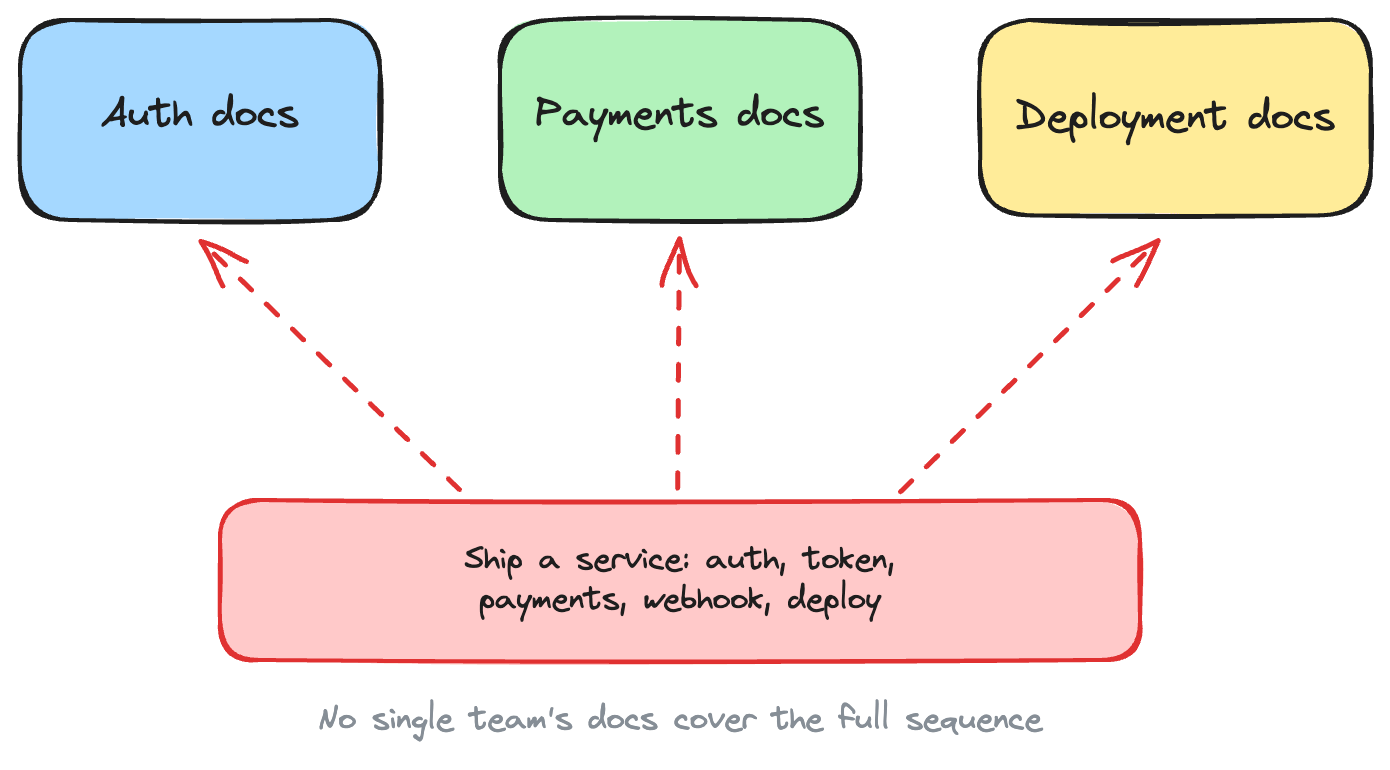
No single team’s docs cover the full sequence. The pieces are documented, but the connection between them isn’t.
What gets lost between docs
The integration patterns that connect one team’s product to another’s live in the heads of senior engineers. They learned them from pairing, from code review, from mistakes shipped to production. The knowledge is there, but it’s never written down because no team owns it.
Per-team docs don’t fix this. The auth team can’t write about how their service gets used inside the payments flow without overstepping, and the payments team can’t document the auth integration without speaking for another team. So nobody does.
The unwritten rules and best practices stay unwritten for the same reason. “Always wrap external calls in the retry helper.” Nobody owns that either, so it lives in code review comments and gets passed on by correction, not documentation.
Codelabs cover the seams
A codelab is a step-by-step exercise that walks an engineer through building something real. A starter repository, a scenario, the steps to get from empty to working, and a reference implementation to compare against.
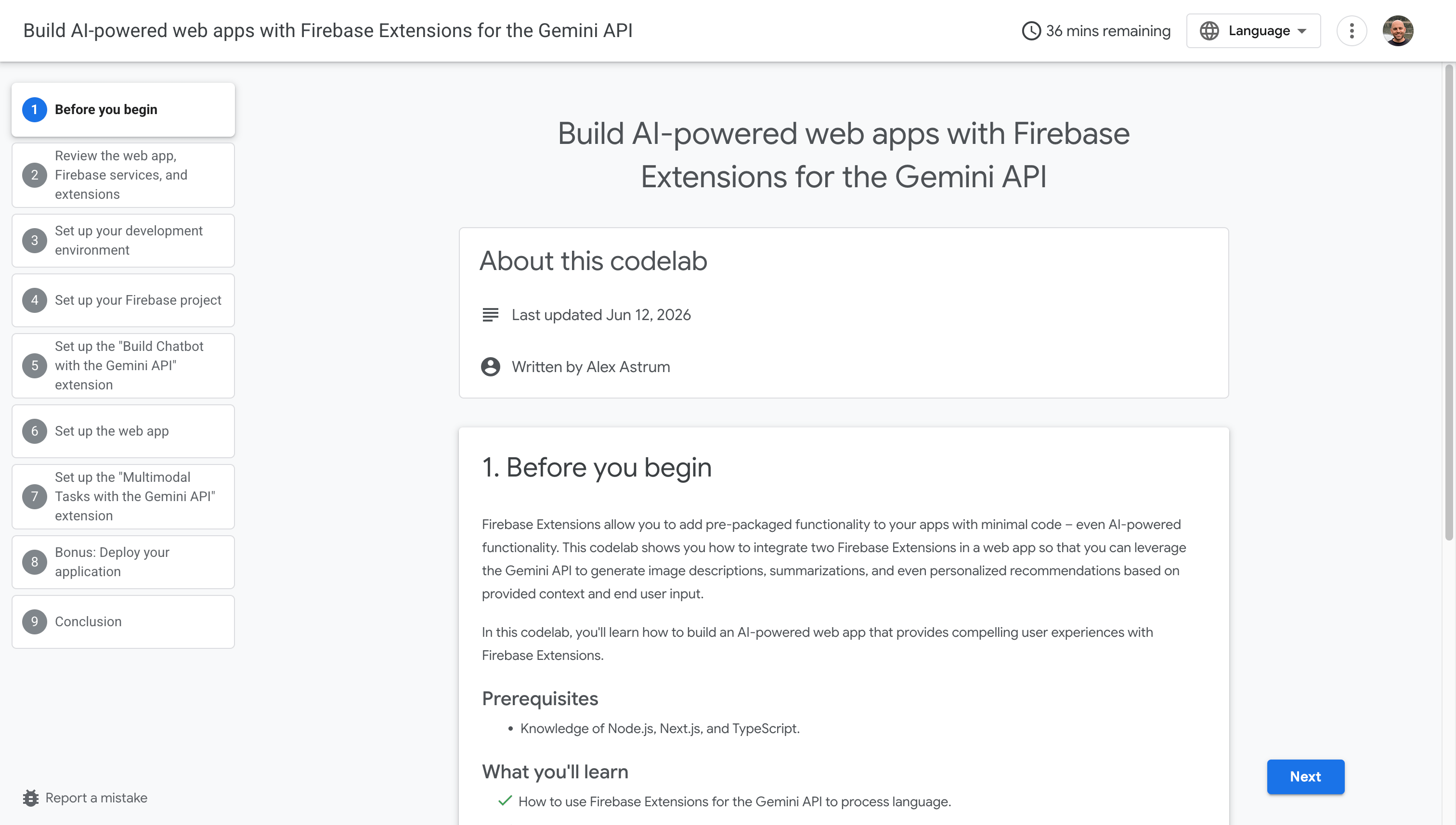
What makes them work as internal docs is that they’re scenario-first, not product-first. A codelab pulls in whichever services the scenario requires.
A codelab on “build a service that handles webhook events from our payment provider” uses three or four internal products in one exercise. By the end, the engineer knows not just what each product does, but how they fit together in the way your company actually builds.
Where to start
If your engineers are slow to ramp up and each team’s docs look fine, the gap is probably between them. This is where a codelab earns its keep.
Pick the cross-team scenario new hires hit first, the one that usually means three weeks of asking around, and build a codelab that walks through it end to end. Keep it current as the services change.
You don’t need many. A handful covering the workflows people actually run does most of the work. The goal isn’t a codelab for everything, it’s getting people through the paths they’ll actually walk.